Greek and Latin Roots
Here is the list of Greek and Latin roots for this week:
Here is a link to all of the Greek and Latin roots we have discussed.
I highly recommend that you use this Wikipedia page to find the meanings of the Greek and Latin roots.
List of Greek and Latin roots in English – Wikipedia
ACT Prep
One way to find if two algebraic expressions are equivalent is to substitute simple numbers, such as 0 or 1, in place of the variable. Both expressions must provide the same result or they are not equivalent.
An equation of 2 variables, x and y, can be represented by a curve through 2-dimensional space. An expression containing 2 variables can use any value of x and y and therefore involves the entire x-y plane.
A system of 2 equations with 2 variables can be solved by a single point which is the intersection of the graphs of the 2 equations. A system of an equation and an expression does not give you enough information to find a specific point (x,y).
Presentations
Tips regarding presentations:
- Try to make your topic more specific
- You have the option of doing other things besides an oral presentation.
- You could do a written project
- You could even write an article for this blog
Assignments
- Fill out the list of Greek and Latin roots.
- Write in the meaning of each root
- Give at least one example of each, be prepared to give its actual definition and the way that it is related to the root word
- Example: If I gave you the root “onym”, you could give the word “synonym” which has the definition of two words with the same meaning. The two roots in the word “syn” and “onym” mean “same name”, indicating two words that name the same thing.
- Fill out the blank space at the bottom with your own root that you have discovered. This will likely come from some of the example words that you have already written. Give a different example than what you have used.
- Example: syn- means “same”, example word “synchronous”
- Be prepared to talk about where you found this information
- Look at this webpage and record the secret code which is “lithium“.
- Presentation
- Research your topic of choice and be prepared to give a 5 minute presentation on the topic, geared toward people your age level.
- Include the background information needed for someone who does not know the topic as well as you.
- Be prepared to talk about how you found this information.
Next week we will meet on Wednesday, 7/3.
Things We Discussed
The Greek Alphabet
Here is a link to the Greek alphabet.
Greek and Latin roots
- Many Greek and Latin roots are very similar, but some are completely different.
- September, October, November and December were originally the names of the 7th, 8th, 9th and 10th months of the year, but were pushed back by 2 months when July and August were added.
- Bi- means two, bio- means life
| Number | Greek | Latin |
| 1 | mono- | uni- |
| 2 | di-,dy-, deutero- | duo-, bi-, bin- |
| 3 | tri- | tri-, terti-, ter-, tern- |
| 4 | tetra- | quadr-, quart- |
| 5 | pent- | quint- |
| 6 | hex- | sext- |
| 7 | hept- | sept- |
| 8 | oct- | oct- |
| 9 | enne- | novem-, non- |
| 10 | deca- | decem-, deci-, decim- |
What we talked about
Transistors
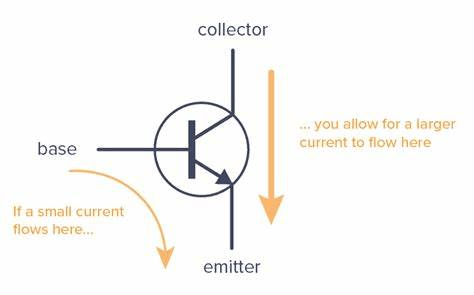
- Transistors act as switches triggered by a very small voltage applied to the middle wire, allowing current to flow through the outer two wires.
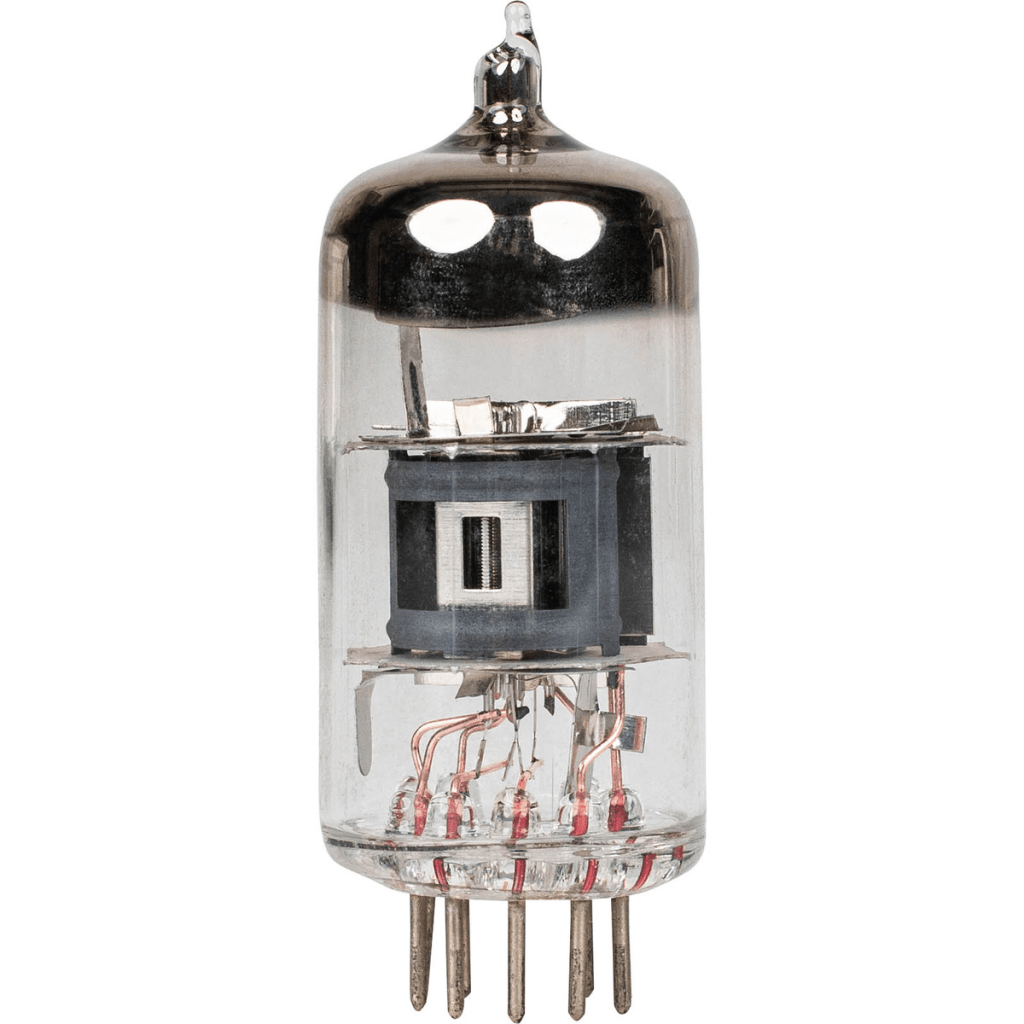
- Beginning in the 1940s, transistors revolutionized electronics, replacing vacuum tubes and allowing computers to shrink from room size to iPhone size, while speeding up and using less power.
- A transistor has a symbol that look like this:
Relays
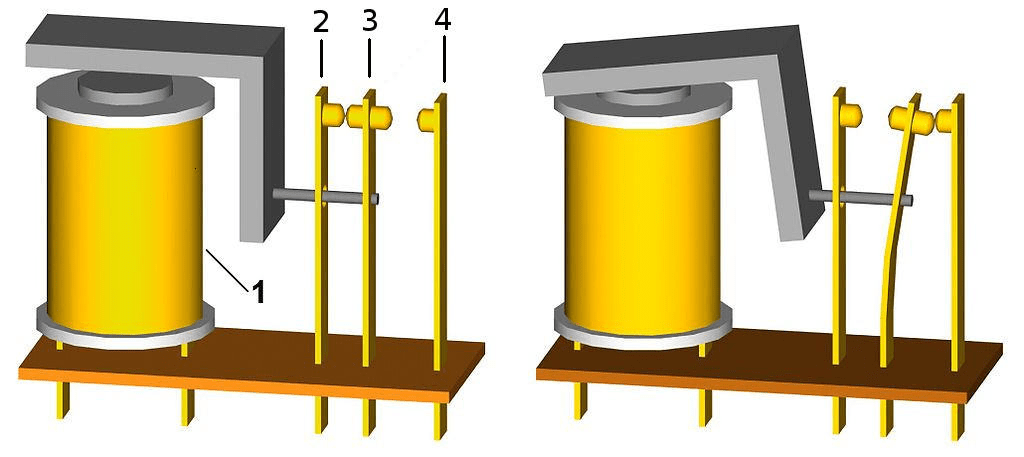
- Relays are mechanical switches that are activated by a much higher electric current that powers an electromagnet.
- Relays use a lot of power, are noisy and wear out.
- We saw a relay in the circuit board from the garage door opener.
Transistor circuit
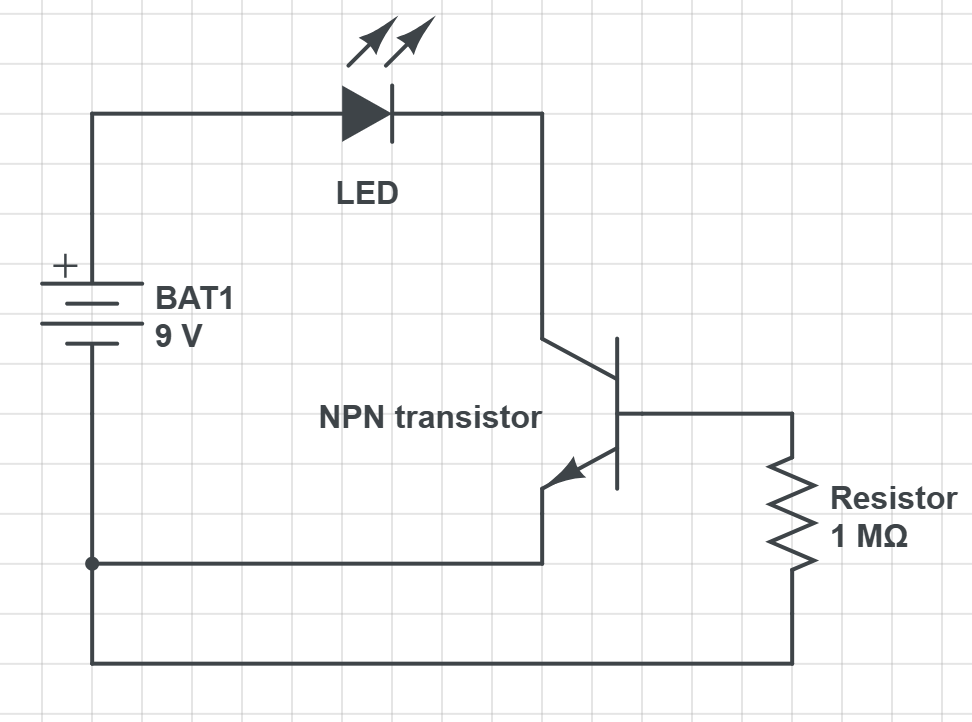
- We looked at this circuit and saw how a very small amount of current passing through a high resistance such as my body was enough to activate the transistor and allow the current to flow through the LED and transistor.
- This circuit can be used to test for a water leak.
Transformers
- Transformers contains two coils of wire: the primary and secondary coils.
- Alternating current through the primary coil creates an alternating magnetic field. The alternating magnetic field then creates an alternating electric field in the secondary coil.
- The voltage and current are controlled by the number of coils. By using a different number of coils for the primary and secondary, the voltage and current coming out is different what went in.
- The transformer that we saw on the circuit board from the garage door opener took 120 VAC (which is standard voltage from an outlet) and transformed it to 22 VAC.
Capacitors
- A capacitor can store a small amount of electricity, similar to a battery.
- Typically, when a capacitor is discharged, it releases the electricity faster than a battery can.
LEDs
- LED stands for light-emitting diode.
- A diode only allows electricity to flow one direction
- The LED has one wire which is longer than the other. That wire is attached to the positive side of the circuit.
Logic operations
- Transistors allow the construction of logic circuits such as AND, OR, etc.
- The output of an AND gate is positive only when both inputs are positive.
- The output of an OR gate is positive if either input is positive.
AC voltage, RMS
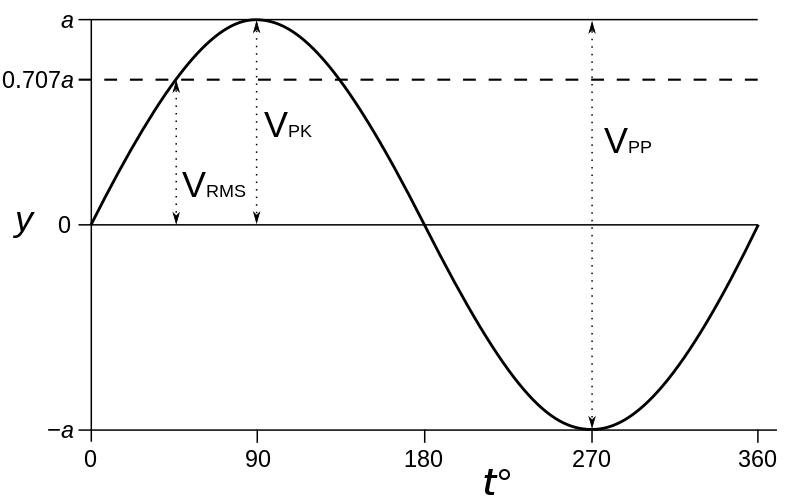
- Alternating current is symmetric above and below the x-axis, so its average voltage is zero.
- Since an average voltage of zero is rather meaningless, a different measure is used, called the Root Mean Square voltage. The exact way that this is calculated requires calculus.
Diodes
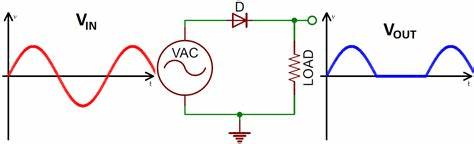
- A diode only allows current to flow in one direction.
- Because of this, when it is used with alternating current, current flows through the diode only during half the cycle and it cuts off flow in the other half.
- Because of this, even though there is overall less current flow, there is now an average current that is not zero. (Creating the effect of having some direct current.)
 CoMo Science
Leave a comment