Greek and Latin Roots
Here is the list of Greek and Latin roots for this week:
Here is a link to all of the Greek and Latin roots we have discussed.
Test your memory of the Greek and Latin roots that we have discussed with this quiz.
This is the link to the Wikipedia list of Greek and Latin roots.
ACT Prep
No ACT Prep questions were discussed in this session.
Presentations
Excellent job picking topics you are interested in and exploring them.
Assignments
- Fill out the list of Greek and Latin roots.
- Write in the meaning of each root
- Give at least one example of each, be prepared to give its actual definition and the way that it is related to the root word
- Example: If I gave you the root “onym”, you could give the word “synonym” which has the definition of two words with the same meaning. The two roots in the word “syn” and “onym” mean “same name”, indicating two words that name the same thing.
- Fill out the blank space at the bottom with your own root that you have discovered. This will likely come from some of the example words that you have already written. Give a different example than what you have used.
- Example: syn- means “same”, example word “synchronous”
- Be prepared to talk about where you found this information
- Presentation
- Research your topic of choice and be prepared to give a 5 minute presentation on the topic, geared toward people your age level.
- Include the background information needed for someone who does not know the topic as well as you.
- Be prepared to talk about how you found this information.
Things We Discussed
Greek and Latin roots
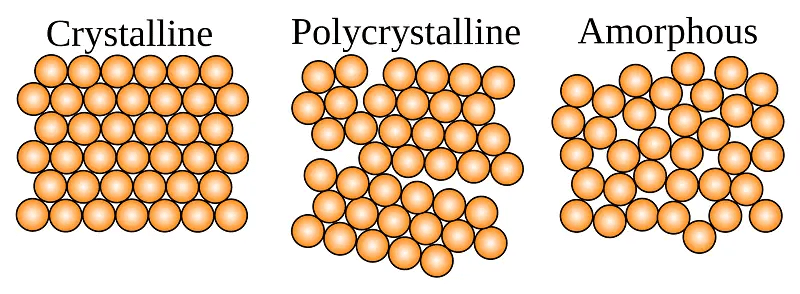
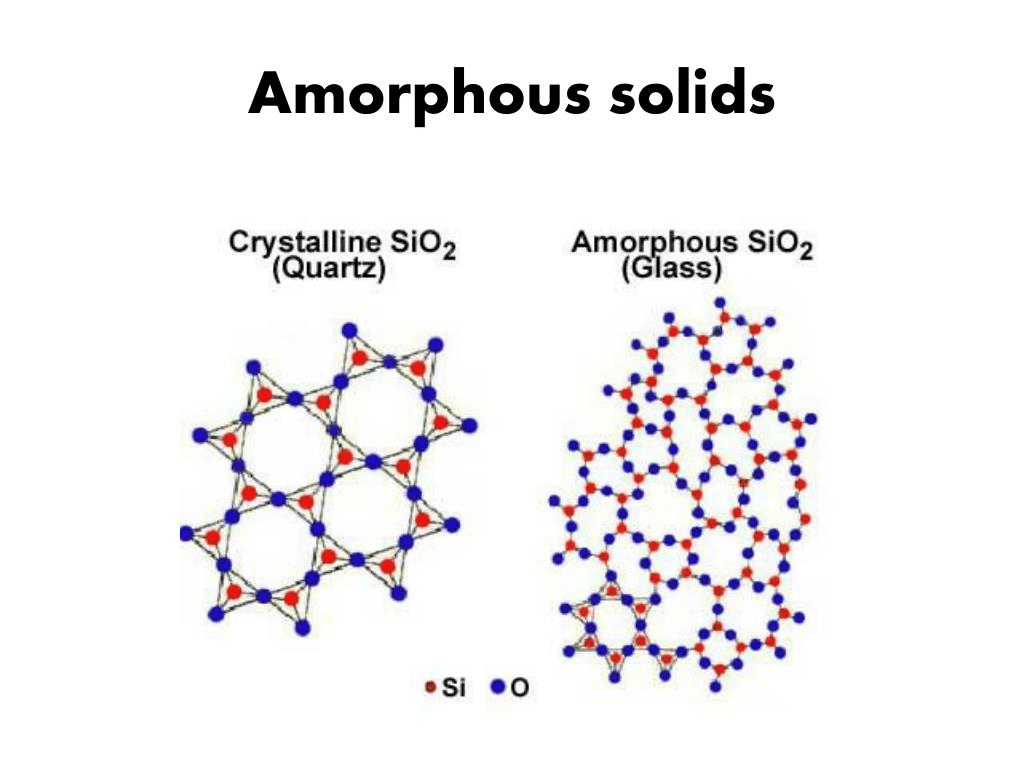
Amorphous means “not having a defined shape”
Crystals have a very definite structure. There is a specific temperature at which the crystalline structure falls apart and the material melts.Glass, on the other hand, is amorphous. It does not have a definite structure and it does not have a melting temperature. Instead, it gets softer and begins to flow more easily over a range of temperatures.
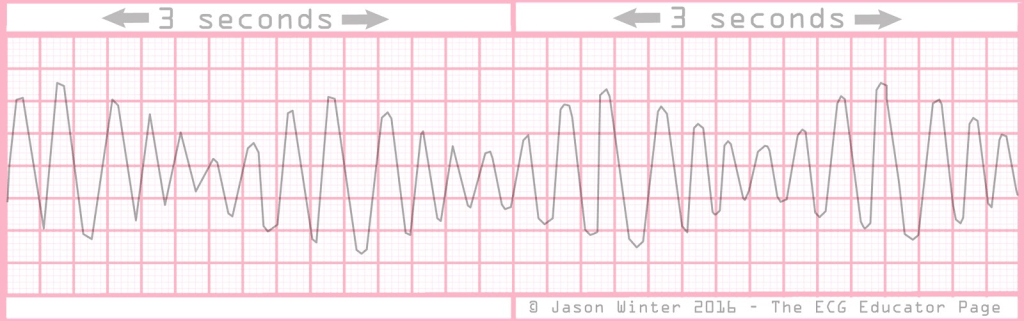
Monomorphic vs. Polymorphic Ventricular Tachycardia
Ventricular tachycardia is a lethal arrhythmia. There are two main types of ventricular tachycardia: monomorphic VT and polymorphic VT.

Polymorphic VT has a variable wave form.
Terrace

Xenopus
Xenopus laevis is the scientific name for the African clawed frog, one of many model organisms used in scientific studies.

Rivers
River Delta
The beginning of a river is called the headwaters or the source. The end of the river is called the mouth. Typically, the mouth of the river empties into a body of water like a lake or ocean. Sometimes a delta forms at the mouth of the river, but not always. The delta is caused by deposits of silt that are dropped by the river as it slows down as it levels out and meets the resistance of the water of the lake or ocean.
Meanings of delta
Delta is the fourth Greek letter1. The capital letter delta (Δ) is shaped like a triangle.
A river delta is often shaped somewhat like a triangle in that it widens as it approaches the mouth of the river.
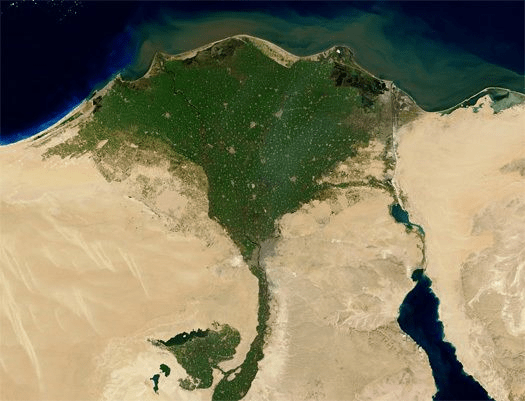
A river delta tends to change from year to year as more silt is added, silt is washed away by the ocean, and the river meanders. Because of this, the Greek letter delta has come to mean “change”. For instance, NASA engineers will often refer to a change in the velocity of a rocket as a “delta v”.
You will see this a lot in chemistry, physics, thermodynamics, calculus, etc.
It is often used to mean the difference between two quantities. For instance, if t1 = 5 sec and t2 = 8 sec, then Δt = t2 – t1 = 3 seconds, since the change in time from t1 to t2 is 3 seconds.
The silt content of a river
A fast moving river can transport more silt than a slow moving river. As the current slows, the silt that was picked up when the current was fast will be dropped. Often the slope of the river flattens out as it nears the mouth, thus dropping its silt and forming a delta. Not all rivers have deltas.
Okavango Delta
Eukaryotes and prokaryotes
All living things can be classified as either prokaryotes and eukaryotes. Prokaryotic cells don’t have a nucleus and eukaryotic cells have a nucleus (and in general, membrane-bound organelles). Prokaryotes include bacteria and archae. Eukaryotes include all multi-cellular organisms as well as single-celled fungi and protists.
DNA replication, transcription and translation2 in eukaryotic cells and prokaryotic cells have significant differences. Because of this, it is easier to develop antibiotics against bacteria (prokaryotic cells) that do not affect human (eukaryotic) cells.
Pathogens
In general, pathogens and “germs” are the same thing. Pathogens cause infections.
Typically, pathogens include viruses, bacteria, fungi, and protists. Prions are poorly understood, fairly rare pathogens. Multicellular parasites like worms and lice are usually said to cause an “infestation” instead of an “infection”.
| Pathogen | Characteristics |
| Viruses | No alive. No chemical reactions are occurring when it is outside the host cell. |
| Bacteria | Prokaryotic cells |
| Fungi | Eukaryotic cells. |
| Protists | Simple celled eukaryotes. |
Antibiotics
Antibiotics target many different functions in bacteria. Many of these functions are related to DNA replication, transcription, and translation or protein synthesis because these are different than in eukaryotes and are essential for survival of the bacteria.

Antifungals
There are fewer targets for antifungals because fungi are eukaryotic cells and there are fewer differences between them and other eukaryotic cells like our own.

 CoMo Science
Leave a comment