Greek and Latin Roots
Here is the list of Greek and Latin roots for this week:
Here is a link to all of the Greek and Latin roots we have discussed.
Test your memory of the Greek and Latin roots that we have discussed with this quiz.
This is the link to the Wikipedia list of Greek and Latin roots.
Assignments
- Fill out the list of Greek and Latin roots.
- Write in the meaning of each root
- Give at least one example of each, be prepared to give its actual definition and the way that it is related to the root word
- Example: If I gave you the root “onym”, you could give the word “synonym” which has the definition of two words with the same meaning. The two roots in the word “syn” and “onym” mean “same name”, indicating two words that name the same thing.
- Fill out the blank space at the bottom with your own root that you have discovered. This will likely come from some of the example words that you have already written. Give a different example than what you have used.
- Example: syn- means “same”, example word “synchronous”
- Presentation
- Research your topic of choice and be prepared to give a 5-minute presentation on the topic, geared toward people your age level.
- Include the background information needed for someone who does not know the topic as well as you.
- Be prepared to talk about how you found this information.
Next week we will meet on 11/21/24.
Things We Discussed
Greek and Latin roots
Here are the Greek and Latin roots we discussed:
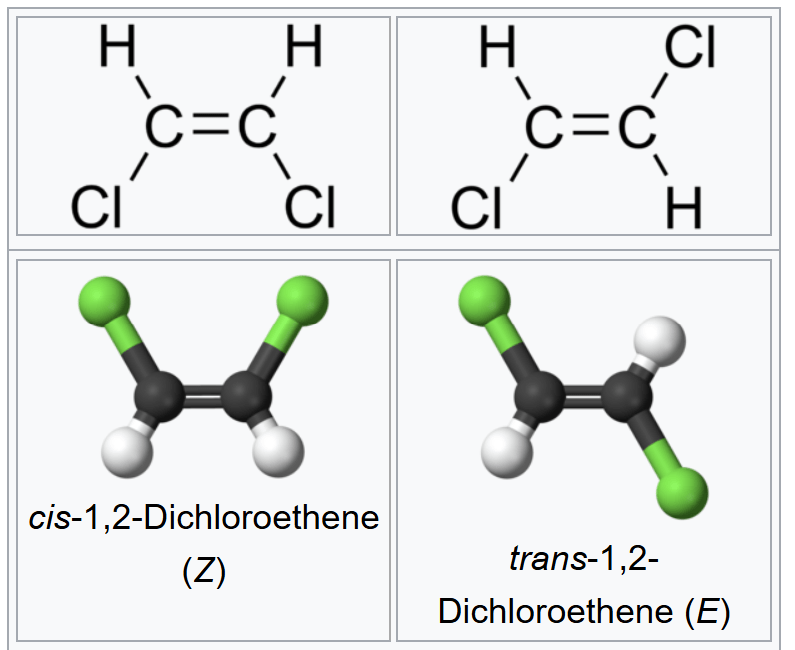
cis- can also mean “same side”. It is the opposite of trans- meaning “across, other side”
Because double and triple bonds do not rotate, a compound may have elements on the same side or opposite sides. Cis- and trans- are used to distinguish between these two isomers. An example is dichloroethene:
Heart Anatomy

Parts of the heart we observed:
- Left ventricle
- Very thick muscle compared to the right ventricle
- Right ventricle
- Thinner muscle than the left ventricle
- The right ventricle wraps around the heart
- Left atrium
- Thin walls
- Has auricle
- Four pulmonic veins empty into the left atrium
- Right atrium
- Thin walls
- Has auricle
- Superior and inferior vena cava empty into the right atrium
- Intraventricular septum
- Wall separating the two ventricles
- Right auricle
- Thin, ear-shaped
- Connects to right atrium
- Left auricle
- Thin, ear-shaped
- Connects to left atrium
- Source of blood clots in atrial fibrillation
- Aorta
- Thick walls
- Round
- Pulmonary artery
- Thinner walls
- Less round
- Superior and inferior vena cava
- Thin walls
- Wide opening
- Pulmonary veins
- Four of them empty into the left atrium
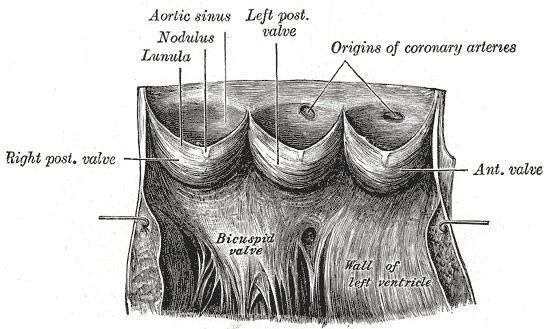
- Aortic valve
- A semilunar valve because it has three leaflets that each resemble a half-moon when the valve is closed
- The openings of the right and left coronary arteries lie just above two of the leaflets
- Pulmonic valve
- Also a semilunar valve
- Tricuspid valve
- An atrioventricular valve because it lies between the right atrium and the right ventricle
- Mitral valve
- The other atrioventricular valve
- Lies between the left atrium and the left ventricle
- Also called the bicuspid valve
- Papillary muscles
- Bumps of cardiac muscle that are attached to the chordae tendineae
- Chordae tendineae
- Thin, tough strings that keep the valve leaflets from moving too far into the atria
- Note the proper spelling of this
- Left anterior descending coronary artery
- Coronary artery that lies on the anterior surface between the left and right ventricles
- Circumflex artery
- Coronary artery
- Right coronary artery
- Coronary artery that lies on the back of the heart
- Pericardium
- Very thin but tough sac that covers the heart
- Attached only around the blood vessels at the base of the heart
- Trachea
- Multiple rings of cartilage to hold it open
- Lungs
- Very spongy
Dissection Videos
Here are some links to videos that show the dissection of the heart.
Dissection Tips
Scalpels
Scalpels come in many different shapes and sizes. The most commonly used are the #10 (curved) and #11 (pointed), although many people will prefer some variants of these.
Curved blades are better for long incisions. Pointed blades are better for piercing.

Probes
Passing a probe through a passage or vessel can often help determine what anatomical structure it is.
Blunt vs. Sharp Dissection
Blunt dissection is performed without cutting through tissue. Instead, the tissues are pulled away from each other. This prevents injury to important structures. Blunt dissection can be performed by inserting the point of closed scissors into the tissue and then opening the scissors up to pull the tissues apart. Blunt dissection can also be performed by pushing a finger through the tissues to separate them.
Sharp dissection can be performed with a scalpel or scissors. Sharp dissection is needed when cutting through tissue, such as the heart muscle, instead of between two different tissues.
Special Cuts
Often specific cuts must be made when dissecting an organ to avoid damaging the structures of interest while at the same time allowing access to visualize those structures.
Instruction manuals and videos are helpful to know the best way to dissect an organ.
 CoMo Science
Leave a comment