- Greek and Latin Roots
- Important Points We Discussed
- Details of Things We Discussed
- Assignments
- Footnotes
Greek and Latin Roots
Here is the list of Greek and Latin roots for this week:
Here is a link to all of the Greek and Latin roots we have discussed.
Test your memory of the Greek and Latin roots that we have discussed with this quiz.
This is the link to the Wikipedia list of Greek and Latin roots.
You can also use these links to research the roots for this week:
Important Points We Discussed
Organic chemistry
- Organic chemistry is the study of the molecules containing carbon.
- Carbon is special because it has 4 bonds and can bond with itself, allowing it to make many more compounds than other elements do.
- The ending “-ose” indicates a sugar.
- Carbohydrates are compounds in which each carbon atom has a -H and an -OH group stuck to it. So each carbon is “hydrated”.
Metals
- The common properties of metals are:
- malleability – able to be beaten into shape with a hammer
- ductility – able to be drawn into a wire
- electrical conductivity – conducts electricity easily
- thermal conductivity – conducts heat well
- luster – polished surfaces are shiny
- The chemical symbols for many elements come from their Latin names including:
- Gold – Au
- Iron – Fe
- Lead – Pb
Heart
- The heart has a natural pacemaker that sends a signal first to the atria and then to the ventricles.
- Atrial fibrillation is an arrhythmia in which the muscle fibers of the atria do their own thing instead of responding to the natural pacemaker.
- The atria do not adequately empty in atrial fibrillation because the atria are not contracting in a coordinated manner.
- Because the atria don’t completely empty, the blood can sit there long enough to form clots.
- The left auricle is a major source of these clots.
- The clots can move through the body and cause a stroke.
- Patients with atrial fibrillation are often put on blood thinners to prevent those clots.
Coagulation cascade
- Coagulation is the process of forming a blood clot.
- There is a protein in the blood, called fibrin, that forms clots.
- Fibrin exists in the blood in an inactive form called fibrinogen.
- Fibrinogen is converted to fibrin by another protein.
- But the protein that converts fibrinogen to fibrin is also inactive.
- There are multiple proteins, called clotting factors, which are all inactive in the blood so they do not set off a reaction that results in blood clots until it is the right time.
- Damage to blood vessels exposed the blood to the body tissues which begins to active the clotting factors.
- Each activated clotting factor can convert many inactive proteins into active ones, amplifying the effect.
Feedback loops
- There are two types of feedback: positive and negative
- Positive feedback loops are rare as they usually lead to things breaking.
- Negative feedback loops are very common.
Curves
- It is more important to understand the general behavior of a curve than to be able to plot it out in detail.
- Polynomial equations with a degree that is even both curve the same direction, toward either positive or negative infinity.
- Polynomial equations with a degree that is odd end up on opposite sides of the x-axis, with one side going to positive infinity and the other going to negative infinity.
- An exponential curve describes many things in nature, however, because it rapidly goes to infinity, some other process eventually takes over.
- A logistic curve is S-shaped. It describes the exponential growth early in a process but also the slowing down later on as resources get used up.
Details of Things We Discussed
Greek and Latin roots
Basic Chemistry
Barium
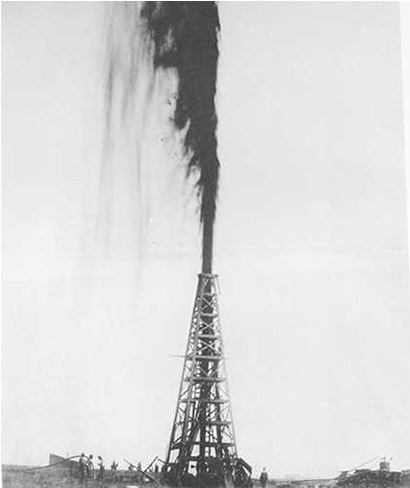
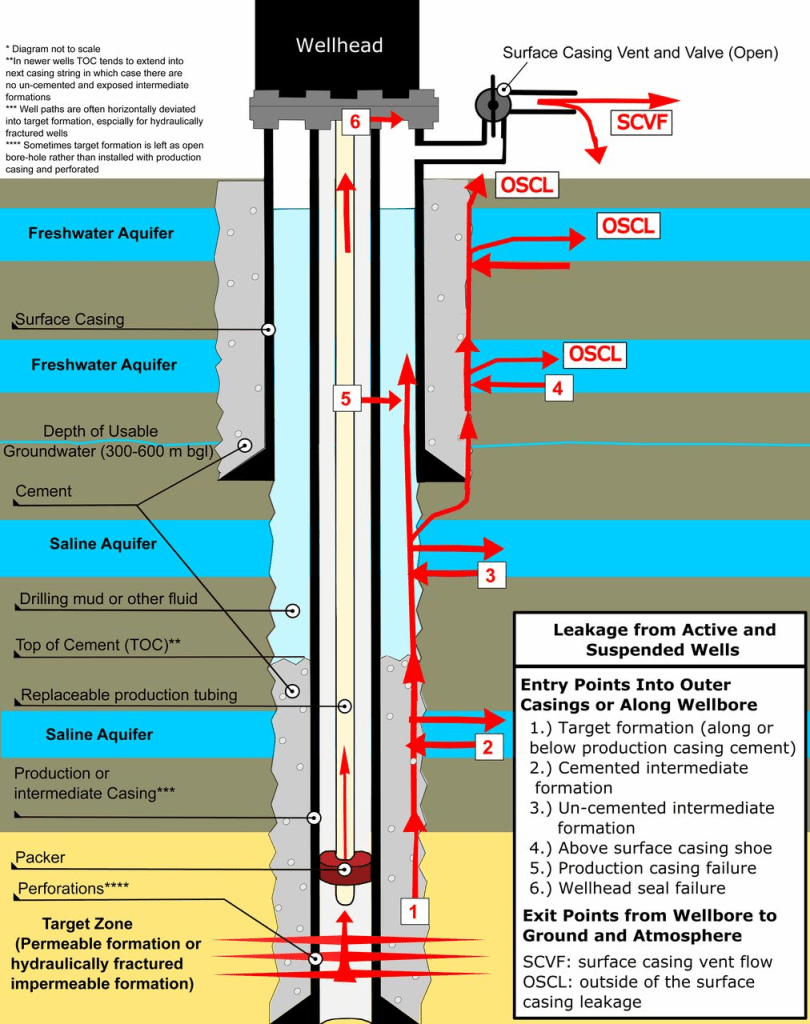
Barium, in the form of baryte (barium sulfate) is used primarily in “drilling mud” to add hydrostatic pressure inside the drill hole to prevent the walls from collapsing, fluids from leaking into the hole from the sides and blowouts from the pressure of the natural gas inside the oil reservoir.
Baryte has a density around 4.5 g/cm3 compared to most rocks that have a density between 2.5 and 3 g/cm3.1
Osmosis
Osmosis is the movement of water through a semipermeable membrane. This occurs commonly in biological systems.
Organic chemistry
Isomers
Iso- means “same”. -mer means “part”.
Isomers are two compounds that have the same number and kind of atoms, but arranged in different ways.
For example, this is 1,2-dichloroethene:

This is 1,1-dichloroethene:

Both compounds have the same chemical formula, C2H2Cl2, but they are different compounds and have different properties. They are isomers of each other.
Sugars
“-ose” indicates a sugar.
Sugars can be monosaccharides, disaccharides, or polysaccharides.
| Sugar | Type | Found in |
| glucose | monosaccharide | grapes, blood sugar |
| galactose | monosaccharide | milk (as part of lactose) |
| xylose | monosaccharide | wood |
| fructose | monosaccharide | fruit |
| mannose | monosaccharide | attached to proteins |
| lactose | disaccharide | milk |
| sucrose | disaccharide | table sugar |
| cellulose | polysaccharide | wood, paper |
Chemical structures
This is the chemical structure of glucose. It has the chemical formula C6H12O6, which can be rewritten as C6(H2O)6, emphasizing that there is the equivalent of a water molecule for each carbon atom.

Glucose can switch between this shape and a ring shape. In fact, it is more often in the ring shape. The diagram below is attempting to show the 3-D structure of the ring. You can see the glucose only has one -OH group that is above the plane of the ring. The diagram above shows the same thing by having only one -OH group on the left.

Mannose is an isomer of glucose. Its chemical structure looks like this.

You can see that mannose differs from glucose in that it has two -OH groups above the plane of the ring. Both glucose and mannose have the same chemical formula.
Increased intracranial pressure
When the brain swells, there is less room inside the skull for blood.2 This can be life-threatening.
One way to decrease the swelling and decrease the pressure inside the skull is to give the patient mannitol into their blood. This makes the blood hypertonic compared to the brain cells and causes water to move by osmosis from inside the cells into the blood stream, shrinking the brain swelling.
PET scans
A radioactive fluorine atom can be attached to glucose producing fluorodeoxyglucose which concentrates in cancer cells. The radioactivity can be detected with a PET scanner, producing an image of the cancer.3

Metals
Pulling wire
Heart
The natural pacemaker in the heart is called the SA node (sinoartial node). The AV node (atrioventricular node) is the electrical connection between the atria and the ventricles.
The atria contract before the ventricles contract because the signal from the SA node reaches the atria first.
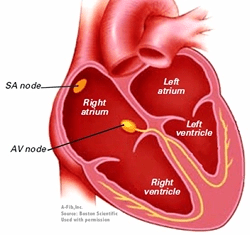
The SA node sends out a signal on its own. It does not need the brain, although it does speed up or slow down in response to stimuli such as being scared.
Atrial fibrillation
This is the electrical signal from a normal heartbeat. The P wave shows the contraction of the atria. The QRS shows the contraction of the ventricle. The P wave is smaller because the atria do not have as much muscle tissue and do not produce as much of an electrical signal. The P wave comes first because the signal from the SA node reaches the atria first.

This is the normal rhythm of the heart with a P wave coming before each QRS. The spacing between each peak of the QRS is the same because the SA node is sending out a signal at a regular rate.

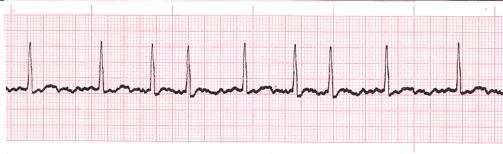
This is a rhythm strip showing atrial fibrillation. There are no P waves and the QRS peaks come at irregular intervals.
Watchman Device
Coagulation cascade
Reasons the coagulation cascade is important include:
- It is necessary for normal function to stop bleeding.
- There are several genetic diseases that affect the coagulation cascade.
- There are many commonly used drugs which act at specific points in the coagulation cascade.


Conditions that require treatment with an anticoagulant include:
- atrial fibrillation
- mechanical heart valve
- deep venous thrombosis & pulmonary embolism
Warfarin (brand name: Coumadin) is a common anticoagulant that blocks the effects of vitamin K.
Feedback loops
Examples of positive feedback loops:
Here are examples of positive feedback mechanisms across various contexts:
Biological Systems
- Blood Clotting: When a blood vessel is injured, platelets adhere to the site and release chemicals that attract more platelets, amplifying the clotting process until the break is sealed.
- Childbirth (Oxytocin Release): During labor, the release of oxytocin causes uterine contractions, which push the baby against the cervix, leading to the release of more oxytocin and stronger contractions.
- Lactation: Suckling by an infant stimulates the release of oxytocin, which causes milk ejection. The ejection reinforces more suckling.
Ecological Systems
- Albedo Effect (Ice and Climate): Melting ice reduces the reflective surface area (albedo), causing the Earth to absorb more solar heat, leading to further ice melting.
- Forest Fires: Heat from a fire dries out nearby vegetation, making it easier for the fire to spread and intensify.
Economic Systems
- Stock Market Trends: Rising stock prices attract more investors, further driving up prices. Similarly, falling prices can lead to panic selling, intensifying the decline.
- Network Effects: As more people adopt a social media platform, its value increases, attracting even more users.
Technology and Innovation
- Viral Content: A popular video or post attracts views and shares, making it even more visible, which in turn attracts more views.
- Software Ecosystems: The more users a platform like Android or iOS has, the more developers create apps for it, increasing its attractiveness to new users.
Engineering and Physics
- Microphone Feedback: A microphone picks up sound from a speaker, amplifies it, and sends it back to the speaker, creating an escalating feedback loop.
- Nuclear Chain Reactions: In nuclear fission, the splitting of one atom releases neutrons that cause more atoms to split, leading to a self-sustaining reaction.
Psychology and Social Behavior
- Encouragement and Performance: A teacher praising a student’s effort may boost the student’s confidence, encouraging them to work harder and achieve more, leading to more praise.
- Group Applause: When one person starts clapping, others join in, amplifying the applause until it becomes widespread.
Positive feedback loops often amplify changes and can lead to exponential growth or rapid escalation until a limiting factor intervenes.
In reality, there is always a limiting factor.
Curves
There are many types of curves used in the sciences4. The logistic curve describes many biological systems.
A classic example is spread of an organism in a new environment. In 1859, 24 wild rabbits were released in Australia to support a hunter’s hobby. Without significant natural predators or disease, the rabbit population grew explosively, so that within 10 years, 2 million rabbits were killed without a noticeable decrease in their population. This explosive growth cannot continue forever, or the entire world would be covered in rabbits. Eventually, limits on factors such as food, water, and shelter result in an equilibrium where the death rate and the birth rate are equal and the population stopping increasing.

Assignments
- Fill out the list of Greek and Latin roots.
- Write in the meaning of each root
- Give at least one example of each, be prepared to give its actual definition and the way that it is related to the root word
- Example: If I gave you the root “onym”, you could give the word “synonym” which has the definition of two words with the same meaning. The two roots in the word “syn” and “onym” mean “same name”, indicating two words that name the same thing.
- Fill out the blank space at the bottom with your own root that you have discovered. This will likely come from some of the example words that you have already written. Give a different example than what you have used.
- Example: syn- means “same”, example word “synchronous”
- Presentation
- Research your topic of choice and be prepared to give a 5-minute presentation on the topic, geared toward people your age level.
- Include the background information needed for someone who does not know the topic as well as you.
- Be prepared to talk about how you found this information.
- Watch the first 3 minutes of this video so we can discuss what the author meant about the dolphins:
Our next meeting will be on 12/5/24.
Footnotes
- Of course, baryte is not the densest material. Gold has a density of around 19 g/cm3. The densest element, osmium, has a density of 22.6 g/cm3. ↩︎
- This is known as the Monro-Kellie hypothesis. ↩︎
- Learn more about PET scans ↩︎
- Here are the most important curves to know. ↩︎
 CoMo Science
Leave a comment