The ancient Greek empire spread mostly eastward and did not have much direct influence on western European culture.
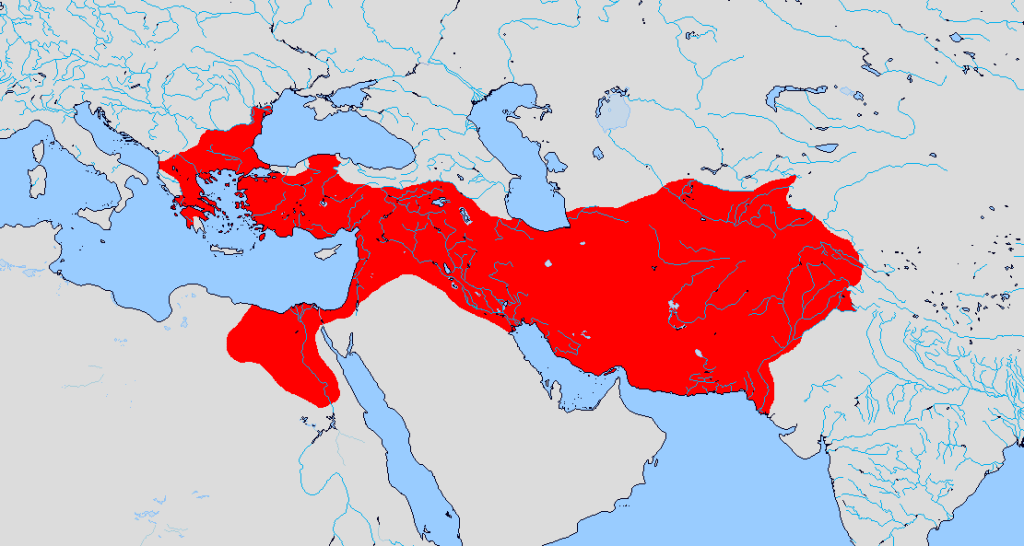
However, the Romans conquered the Greeks early in the development of the Roman empire. Even though the Romans won, they realized that the Greeks were more advanced than them in many areas including art, literature, and science. The Romans adopted much of Greek life.
The Roman empire spread throughout much of western Europe, carrying Greek influence with it.
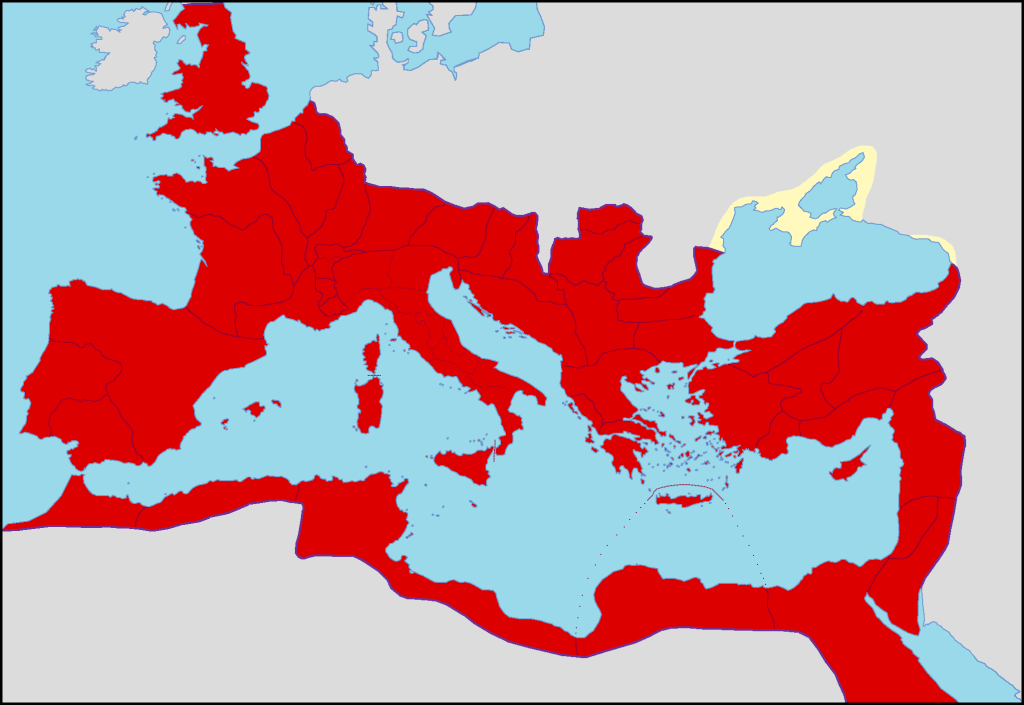
Many of the modern European languages are descended from Latin, including Spanish, French, and Italian. These are called “Romance languages”, not because they are romantic, but because they are derived from Roman influence. (Although Rome conquered much of Britain, English is not derived directly from Latin. Instead, it is a combination of many influences, especially Germanic. See: Why English is a Germanic Language)

There are several reasons why scientific words are made from Greek and Latin roots:
- Because the Roman empire controlled much of western Europe, many of the languages of western Europe, such as French, Italian, and Spanish, developed from Latin.
- Because scientific information is often passed between different countries, it is helpful to name things in a way that a lot of scientists can understand.
- Using Greek and Latin roots provides a way to name something new that many people can immediately understand. The collection of modern words formed from these classical roots is called the “international scientific vocabulary.”
Even after Latin was no longer spoken in everyday life, it continued to be taught to students of science, literature, law, and religion. Until about a hundred years ago, scientists often wrote their papers and books in Latin instead of their native languages so that people who spoke other languages could read and understand them.
 CoMo Science
Leave a comment