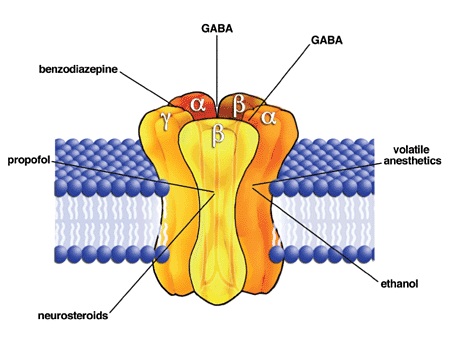
Cell membrane receptors are proteins embedded in the cell membrane that allow signals from the outside of the cell to trigger events inside the cell. When the appropriate molecule attaches to the receptor, the receptor can change configuration in one of two major ways:
- the change in shape can open or close a channel that allows a substance, often an ion, into the cell. These receptors are called sodium channels, calcium channels, potassium channels, etc.
- a change to the shape of the receptor on the outside of the cell can lead to a change to the shape of the part of the receptor on the inside of the cell, allowing it to bind to molecules inside the cell, activating signal pathways.
Some molecules bind to the receptor but do not activate the receptor. When they bind to the receptors, they prevent other molecules from binding to the receptor. They are therefore called antagonists, blockers, or inhibitors.
Beta-Adrenergic Receptor Agonists and Antagonists:
- Beta-Adrenergic Agonists: Stimulate beta-adrenergic receptors, leading to effects such as bronchodilation (e.g., albuterol, salbutamol).
- Beta-Adrenergic Antagonists (Beta-Blockers): Block beta-adrenergic receptors, reducing heart rate and blood pressure (e.g., metoprolol, propranolol).
Alpha-Adrenergic Receptor Agonists and Antagonists:
- Alpha-Adrenergic Agonists: Stimulate alpha-adrenergic receptors, leading to vasoconstriction and pupil dilation (e.g., phenylephrine).
- Alpha-Adrenergic Antagonists: Block alpha-adrenergic receptors, causing vasodilation and decreasing blood pressure (e.g., prazosin, doxazosin).
Muscarinic Acetylcholine Receptor Agonists and Antagonists:
- Muscarinic Agonists: Activate muscarinic acetylcholine receptors, leading to effects such as increased salivation and smooth muscle contraction (e.g., pilocarpine).
- Muscarinic Antagonists (Anticholinergics): Block muscarinic acetylcholine receptors, causing relaxation of smooth muscle and reducing glandular secretions (e.g., atropine, ipratropium).
Nicotinic Acetylcholine Receptor Agonists and Antagonists:
- Nicotinic Agonists: Activate nicotinic acetylcholine receptors, stimulating skeletal muscle contraction or neurotransmitter release (e.g., nicotine).
- Nicotinic Antagonists: Block nicotinic acetylcholine receptors, used as muscle relaxants or in anesthesia (e.g., tubocurarine).
Opioid Receptor Agonists and Antagonists:
- Opioid Agonists: Bind to opioid receptors (mu, delta, kappa) in the brain and spinal cord, reducing pain perception and causing sedation (e.g., morphine, oxycodone).
- Opioid Antagonists: Block opioid receptors, reversing the effects of opioid agonists and used in overdose situations (e.g., naloxone, naltrexone).
Dopamine Receptor Agonists and Antagonists:
- Dopamine Agonists: Activate dopamine receptors, used in conditions like Parkinson’s disease and hyperprolactinemia (e.g., levodopa, bromocriptine).
- Dopamine Antagonists: Block dopamine receptors, used as antipsychotics and antiemetics (e.g., haloperidol, metoclopramide).
Serotonin Receptor Agonists and Antagonists:
- Serotonin Agonists: Activate serotonin receptors (various subtypes), used in migraine treatment and mood disorders (e.g., sumatriptan, buspirone).
- Serotonin Antagonists: Block serotonin receptors, used in antiemetics and psychiatric disorders (e.g., ondansetron, cyproheptadine).
Histamine Receptor Agonists and Antagonists:
- Histamine Agonists: Activate histamine receptors (H1, H2, H3, H4), leading to allergic responses and gastric acid secretion (e.g., diphenhydramine, ranitidine).
- Histamine Antagonists: Block histamine receptors, used in allergy relief and gastric acid suppression (e.g., cetirizine, cimetidine).
GABA Receptor Modulators:
- GABA Agonists: Enhance GABA receptor activity, leading to sedative and anxiolytic effects (e.g., benzodiazepines like diazepam, barbiturates).
- GABA Antagonists: Block GABA receptors, used in the management of epilepsy (e.g., bicuculline).
Glutamate Receptor Modulators:
- NMDA Receptor Antagonists: Block N-methyl-D-aspartate (NMDA) receptors, used in anesthesia and management of neuropathic pain (e.g., ketamine, memantine).
- AMPA Receptor Modulators: Modulate alpha-amino-3-hydroxy-5-methyl-4-isoxazolepropionic acid (AMPA) receptors, involved in synaptic plasticity (e.g., perampanel).
Calcium Channel Blockers:
- Block calcium channels in cardiac and smooth muscle cells, leading to vasodilation and decreased cardiac contractility (e.g., amlodipine, diltiazem).
Sodium Channel Blockers:
- Block sodium channels in neurons and cardiac tissue, altering electrical activity and reducing excitability (e.g., lidocaine, phenytoin).
Potassium Channel Blockers:
- Block potassium channels, affecting membrane potential and cardiac repolarization (e.g., amiodarone, dofetilide).
Angiotensin II Receptor Blockers (ARBs):
- Block angiotensin II receptors, leading to vasodilation and reduced aldosterone secretion (e.g., losartan, valsartan).
Proton Pump Inhibitors (PPIs):
- Inhibit the H+/K+ ATPase pump in gastric parietal cells, reducing gastric acid secretion (e.g., omeprazole, esomeprazole).
Insulin
- Binds to insulin receptors on muscle and adipose tissue, increasing glucose uptake by the cells.
 CoMo Science
Leave a comment