Greek and Latin Roots
Here is the list of Greek and Latin roots for this week:
Here is a link to all of the Greek and Latin roots we have discussed.
ACT Prep
We discussed:
- combining two sentences into one using a comma
- setting apart an appositive with commas: John, the pilot, loved to fly.
- A semicolon is a punctuation mark that can be used to:
- Connect two independent clauses (full sentences) that are related in meaning. Example: I like to read; I am an avid reader of historical fiction.
- This could be written: I like to read. I am an avid reader of historical fiction.
- Separate list items that contain internal punctuation such as commas and dashes. Example: Brianna’s book collection includes horror stories, which are her favorites; romance novels, which are her guilty pleasure; and history books, which she finds fascinating.
- Replacing the semicolons with commas would technically be correct but confusing.
- Show a bigger separation between clauses that are connected without a conjunction. Example: I have painted the house; I still need to sand the floors.
- This could be written: I have painted the house, but I still need to sand the floors.
- Connect two independent clauses (full sentences) that are related in meaning. Example: I like to read; I am an avid reader of historical fiction.
Presentations
Tips regarding presentations:
- Try to make your topic more specific
- You have the option of doing other things besides an oral presentation.
- You could do a written project
- You could even write an article for this blog
- When you are faced with a large topic with many details that seems overwhelming, it is often helpful to take get an overall understanding by grouping many categories into 2-4 categories.
- Example: For instance, Wikipedia lists at least 8 categories of seizures, but divides them into two categories: generalized and focal seizures.
- When you are reading about a topic and you come across something unknown, tracking down the meaning to that part can often be very interesting in itself. There is a balance between understanding the full context of your topic and becoming overwhelmed with details.
- Example: gabapentin is indicated for postherpetic neuralgia. See the discussion of shingles below.
- In both cases, it is better to truly understand the information rather than gathering a lot of information.
- A topic is better understood if you use multiple methods which can include:
- reading introductory information about the topic (designed for patients or students, for example)
- reading Wikipedia – although this is somewhat unreliable, it is a great resource for understanding just a little bit about side topics
- taking notes in your own words about the topic, such as:
- organizing information into tables
- drawing diagrams
- lists of steps
- watching videos of examples or demonstrations
- performing your own calculations (in math, physics, etc)
- explaining the topic to someone else (especially without notes), especially if they ask you questions, which often reveals what you don’t know
- talking to a person who knows the material
Assignments
- Fill out the list of Greek and Latin roots.
- Write in the meaning of each root
- Give at least one example of each, be prepared to give its actual definition and the way that it is related to the root word
- Example: If I gave you the root “onym”, you could give the word “synonym” which has the definition of two words with the same meaning. The two roots in the word “syn” and “onym” mean “same name”, indicating two words that name the same thing.
- Fill out the blank space at the bottom with your own root that you have discovered. This will likely come from some of the example words that you have already written. Give a different example than what you have used.
- Example: syn- means “same”, example word “synchronous”
- Be prepared to talk about where you found this information
- Presentation
- Research your topic of choice and be prepared to give a 5 minute presentation on the topic, geared toward people your age level.
- Include the background information needed for someone who does not know the topic as well as you.
- Be prepared to talk about why you chose the topic and how you found information about it.
Next week we will meet on 7/18/24.
Things We Discussed
Greek and Latin roots
Using the Greek Alphabet
Combining your knowledge of Greek roots and how the Greek alphabet transliterates into English helps you recognize Greek words in Biblical texts and can sometimes help you understand the passage better.
- John 1:1 Ἐν ἀρχῇ ἦν ὁ λόγος, καὶ ὁ λόγος ἦν πρὸς τὸν θεόν, καὶ θεὸς ἦν ὁ λόγος.
- John 16:13 ὅταν δὲ ἔλθῃ ἐκεῖνος, τὸ πνεῦμα τῆς ἀληθείας, ὁδηγήσει ὑμᾶς εἰς τὴν ἀλήθειαν πᾶσαν. οὐ γὰρ λαλήσει ἀφ᾽ ἑαυτοῦ, ἀλλ᾽ ὅσα ἀκούσει λαλήσει καὶ τὰ ἐρχόμενα ἀναγγελεῖ ὑμῖν.
- Matthew 5:36 μήτε ἐν τῇ κεφαλῇ σου ὀμόσῃς ὅτι οὐ δύνασαι μίαν τρίχα λευκὴν ποιῆσαι ἢ μέλαιναν
These verses are from the Tyndale House Greek New Testament found at www.biblegateway.com.
Blood cell lines
There are three main blood cell lines:
| common name | medical terminology | function |
| red blood cells | erythrocytes | carry oxygen |
| white blood cells | leukocytes | fight infection |
| platelets | thrombocytes | form blood clots |
Organic Chemistry
- In organic chemistry, molecular structures are drawn without showing most carbon atoms (although in this illustration, three of the carbon atoms are shown to reduce some confusion), and most hydrogens attached to carbon atoms are not shown. The presence of the hydrogen atom is implied because each carbon should have 4 bonds.
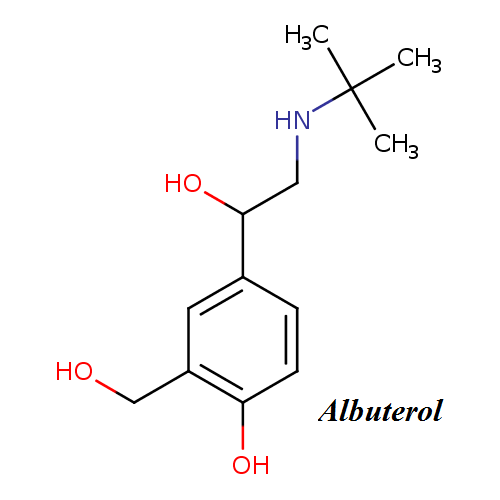
- Functional groups are groups of atoms that typically stay together during chemical reactions. Functional groups have particular properties which they often give to the molecule, making them acidic or more soluble in water, for example.
- There are hundreds of functional groups but only a small number need to be recognized by most people (the non-organic chemist sort of people).
- Double bonds don’t twist like single bonds do. “Why?” is a great question, but complicated.
- Benzene rings can be drawn with a circle in the middle to indicate the bonds switch position.
Shingles
- Chickenpox is caused by a virus from the family of herpes viruses.
- Even though chickenpox clears up quickly, the virus continues to live in your nerves for the rest of your life.
- At some point later in life, the virus may become activated in one nerve, causing a painful rash along that one nerve. This rash is called “shingles” or “herpes zoster”.
- Nerves can be mapped to the skin. The skin that is innervated by a nerve is called a dermatome.

- The nerves coming from your cervical spine are labeled C1-8, those from your thoracic spine are labeled T1-12, and those from your lumbar spine are labeled L1-5. Those coming from your sacrum are labeled S1-2.

- Because herpes zoster causes inflammation of the nerve, it can be very painful, even after the rash has gone away.
- The pain that remains is called “postherpetic neuralgia”.
Drugs
- We discussed the different sections of the prescribing information.
- See this link for more information: Full Prescribing Information Sections
Albuterol
- Albuterol is a medication that is used to relax the smooth muscles of the airways, which helps open up the airways to help a patient breath better.
- Albuterol is the most commonly used medication for people with asthma, although there are many others.
- We skimmed the prescribing information for albuterol, focusing on the chemical structure and the FEV1 vs. time graphs
Seizures
- Seizures are caused by abnormal electrical activity in the brain.
- This electrical activity can be measured with an EEG.
- The electrical activity usually starts in a specific part of the brain. The electrical activity may stay localized in that one part of the brain (this is called a focal seizure), or the electrical activity may spread throughout the brain (this is called a generalized seizure).
Here is a video of a man having a generalized tonic-clonic seizure. It shows the stages including:
- normal alertness
- aura – the first hint of a seizure seems to be when his hand stops moving
- tonic phase – when his head turns and he stiffens up
- clonic phase – when he shakes rhythmically
- postictal phase – unresponsiveness and confusion after the seizure. This phase may last from a few minutes to several hours, slowly improving over time.
Notice that he is in a hospital bed that is padded and he has EEG electrodes on his head already. He is being recorded to see what his seizures are like so the doctors know how to best treat him.
Notice how everyone, including his family, reacts. They are calm because they have seen this before.
Notice how the electrical activity starts in one part of his brain and then spreads throughout the rest of his brain.
There is concern about him vomiting because of the risk of aspiration of the vomit into his lungs when he is not able to protect his airway.
Respiratory Therapy
- We discussed the life of an RT, including:
- educational requirements
- certification
- personality qualitities
- duties
Albuterol MDI
- MDI stands for meter-dosed inhaler
- An MDI often has a counter that shows how many puffs are left since propellant can still come out even when the medication has run out
Peak Flow Meter
- A peak flow meter is a tool to measure how well someone with asthma is breathing. It can be used every day to see if they are having a good day or bad day. It can also be used to see if the treatment is being effective.
- A peak flow meter can be adjusted to show the normal ranges based on the age or weight of the patient.
- A peak flow meter is different that a spirometer which can be used to measure FEV1, the forced expiratory volume in 1 second.
ETT
- An endotracheal tube is used to aid breathing in an unconscious patient. It can be used if the patient is unable to adequately breath on their own or if they are at risk for aspiration.
- Endotracheal tubes come in different diameters and lengths to be used on different sized patients.
- They are marked to show how deep the tube has been placed into the airway.
- Most endotracheal tubes have a balloon that can be inflated to help keep the tube in the airway and to prevent secretions from going into the patient’s lungs.
- However, the balloon is not trusted to keep the tube in place and the tube is always taped or otherwise secured to keep it from moving.
- The tube has a metallic stripe running down it to help it show up on x-ray.
- Even though the tubes come in different sizes, the connector at the end is always the same to allow it to be connected to a ventilator or bag.
Electricity
- Electricity is generated at a power plant which may be powered by:
- coal
- natural gas
- nuclear power
- These all generate heat which is used to produce steam to turn a generator.
- A hydroelectric dam uses water pressure to turn the generator.
- A wind turbine uses the wind to turn the generator.
- Only solar power does not involve turning a generator.
- The electricity from a power plant is carried by high voltage transmission lines to substations where transformers lower the voltage. The electricity then is carried to houses by lower voltage lines and goes through another transformer just before entering the house.
- A changing magnetic field produces an electric current in a wire. This is the fundamental principle behind the production of almost all electricity generated by utility companies (except for solar power).
 CoMo Science
Leave a comment