General information
Dissections can be performed on fresh or preserved specimens. Preservation is usually done using formaldehyde (also known as formalin). Preservation allows the specimen to be kept longer before dissection and decreases the risk of infection, but it changes the texture and color of the specimen and makes it smell bad.
Dissections can be carried out to learn anatomy but can also be used to retrieve specimens for research purposes, such as starting a cell culture or determining the results of an experiment. Dissection is a basic surgical skill as well.
Safety
Scalpels, scissors, and probes are all sharp and pose a risk of injury.
Formaldehyde is toxic and exposure to its fumes should be limited by using good ventilation.
Gloves should be worn to avoid exposure to infection and chemicals. A lab coat or apron is often worn to protect your clothing.
Equipment & Materials
Scalpels
Scalpels come in many different shapes and sizes. The most commonly used are the #10 (curved) and #11 (pointed), although many people will prefer some variants of these.
Curved blades are better for long incisions. Pointed blades are better for piercing.

Scissors

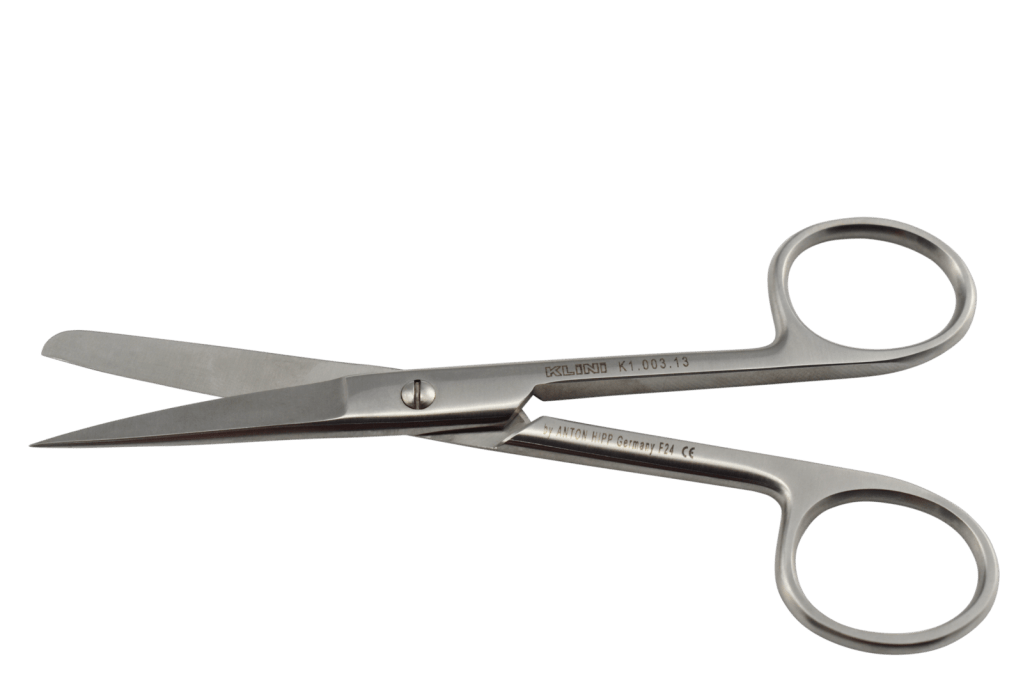
Iris scissors have very fine tips and can be used to make small cuts in delicate tissues.
Sharp/blunt scissors have one tip that is blunt, which can be used to push underlying tissues out of the way as the cut is being made.
Scissors can be used for either sharp or blunt dissection.
Bone cutters

Bone cutters have thicker jaws than scissors. These are specialized to cut through hard tissues such as bone. These come in a variety of sizes, shapes and angles.
Probes


Probes come in many shapes and sizes. Blunt probes can be used to follow a passage or vessel to help determine what anatomical structure it is. Sharp probes can be used to manipulate smaller structures out of the way.
Forceps
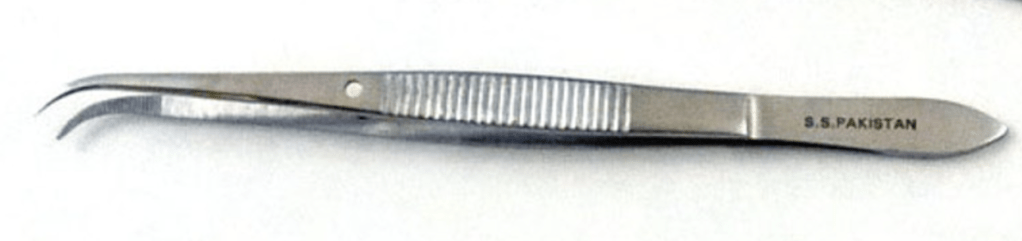
Forceps may informally be called “tweezers” or “pick-ups”. They may be straight or curved. These are used to hold or manipulate small parts of a specimen.
T-Pins
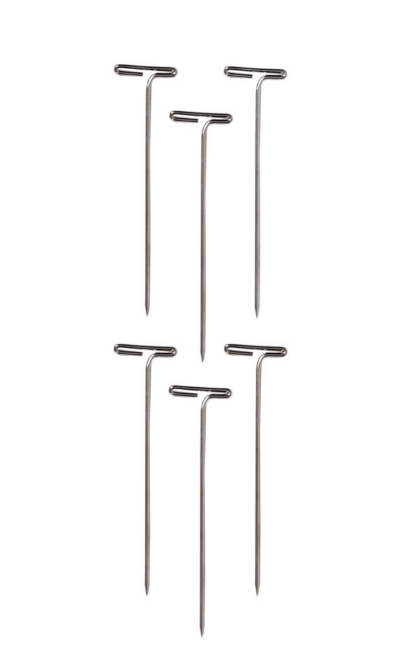
These are used to pin parts of the specimen out of the way, typically securing them to a dissection tray.
Dissection tray

A dissection tray provides a stable surface with wax or silicone to pin specimens.
Techniques
Loading & unloading a scalpel blade
Blunt vs. Sharp Dissection
Blunt dissection is performed without cutting through tissue. Instead, the tissues are pulled away from each other. This prevents injury to important structures. Blunt dissection can be performed by inserting the point of closed scissors into the tissue and then opening the scissors up to pull the tissues apart. Blunt dissection can also be performed by pushing a finger through the tissues to separate them. An example of this is peeling an orange with your finger.
Sharp dissection can be performed with a scalpel or scissors. Sharp dissection is needed when cutting through tissue, such as the heart muscle, instead of between two different tissues.
Special Cuts
Often specific cuts must be made when dissecting an organ to avoid damaging the structures of interest while at the same time allowing access to visualize those structures.
Instruction manuals and videos are helpful to know the best way to visualize a structure of interest without damaging the structure.
More In This Series
- Lab Skills – Basic ChemistryLaboratory techniques which are first introduced in chemistry are often used throughout more specialized and advanced labs. This post reviews the equipment and techniques used, providing links to curated videos demonstrating these techniques.
- Lab Skills – Cell CultureThis post reviews the equipment and techniques used in cell culture, including links to curated videos demonstrating the techniques. Part of the Lab Skills series.
- Lab Skills – Dissection
 Dissection is a basic lab skill used to learn anatomy and also to obtain specimens for research. This post, part of the Lab Skills series, reviews basic equipment and techniques used in dissection.
 - Lab Skills – MicroscopyMicroscopy is a basic lab skill used frequently in biology, but also in geology, material science, and engineering. This post, part of the Lab Skills series, reviews basic equipment and techniques used in microscopy.
- Lab Skills – MicrobiologyMicrobiology skills are used in a wide variety of fields, including healthcare, medical research, genetic engineering, and food safety. This post, part of the Lab Skills series, reviews basic equipment and techniques used in a microbiology lab.
 CoMo Science
Leave a comment