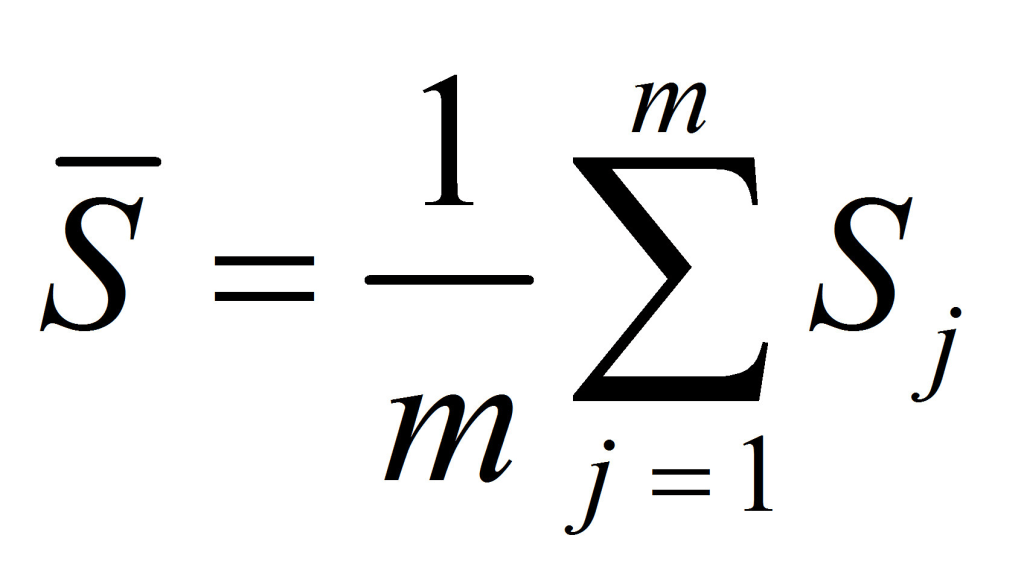
What are j, m, and Sj?
They are all variables.
What are the possible values of m?
m must be a positive integer.
What are the possible values of j?
Positive integers from 1 to m.
What does Σ represent?
Σ, the uppercase Greek letter sigma, is used in mathematical notation to indicate a sum.
What does the formula on the right side of the equal sign compute?
The average of all the Sj‘s.
What does the line over the S represent?
It indicates the average value of all S’s
If you used this formula to compute the average of 5, 9, and 14, how many Sj‘s would there be and what would the values of the Sj‘s and m be?
There would be 3 Sj‘s: S1 = 5, S2 = 9, S3 = 14; and m = 3
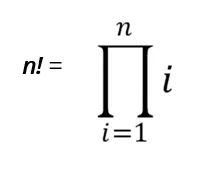
If the capital Greek letter pi, Π, can be used to indicate the product in the same way that Σ is used to indicate a sum, how could the formula for n! be written?
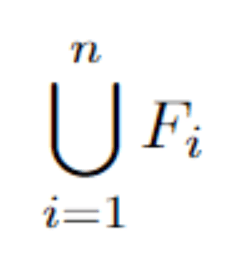
How could the union of the sets, F1, F2, F3, … Fn, be written in a similar way?
Goals of this image:
- Interpret the different parts of the mathematical notation
- Sj representing a set of different variables
- The bar over the S representing an average
- The special role of the variables above and below the sigma representing the upper and lower bounds of the indices
- Interpret the sigma notation as a sum
- Recognize this formula as a way of writing what you already know as the formula for an average
- Generalize summation notation to understand other notations as well as
- Product
- Union
 CoMo Science
Leave a comment